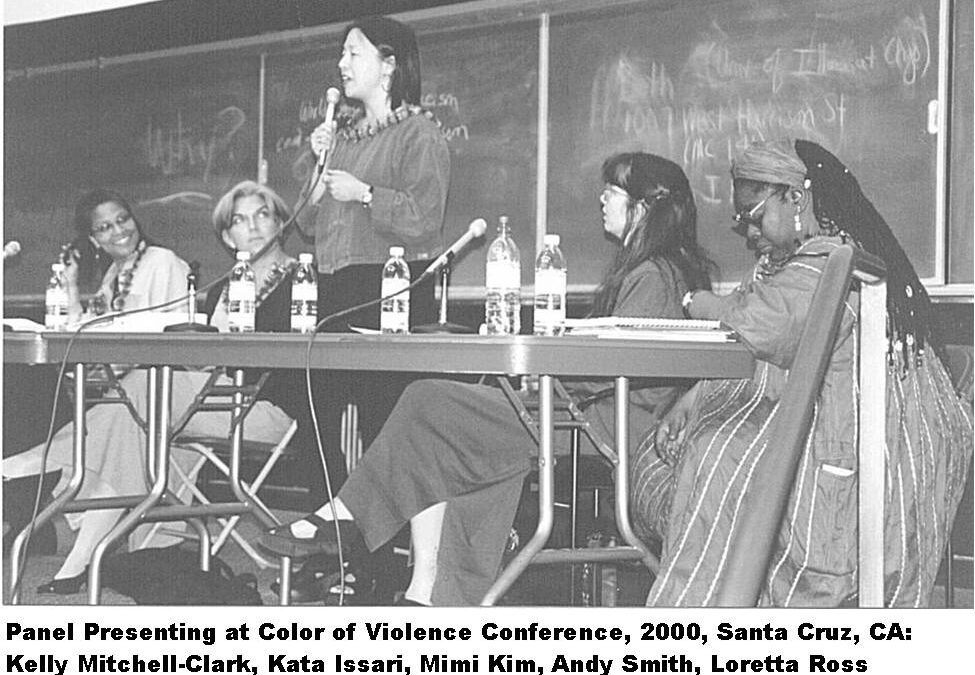

In 2006, INCITE! launched Color of Violence: The INCITE! Anthology. Published by the wonderful South End Press, Color of Violence presents the fierce and vital writing of 33 visionary radical feminists of color demanding that we address violence against women of color and trans people of color in all its forms, including interpersonal violence (such as sexual and domestic violence) and state violence (such as police brutality, militarism, attacks on immigrants and Indian treaty rights, the proliferation of prisons, economic neo-colonialism, and violence from the medical industry).
In the tradition of This Bridge Called My Back, Color of Violence is an urgent, bold, and essential intervention in the war against women of color, their communities, and, ultimately, us all.
Click here for more info about Color of Violence, including how the anthology came about.
In 2007, INCITE! released a second anthology: The Revolution Will Not Be Funded: Beyond The Non-Profit Industrial Complex, which asks the question: What is the impact of the non-profit system on revolutionary movement building?
In this landmark collection also published by South End Press, over 25 activists and scholars describe and discuss the non-profit industrial complex (NPIC)—a system of relationships between the state, the owning classes, foundations, and social service & social justice organizations that results in the surveillance, control, derailment, and everyday management of political movements.
Click here for more info about The Revolution Will Not Be Funded.
Written by Andrea Smith and published by South End Press, Conquest: Sexual Violence and American Indian Genocide places Native American women at the center of the analysis of sexual violence, challenging both conventional definitions of the term and conventional responses to the problem.
Beginning with the impact of the abuses inflicted on Native American children at state-sanctioned boarding schools from the 1880s to the 1980s, Smith expands our conception of violence to include the widespread appropriation of Indian cultural practices by whites and other non-Natives; environmental racism; and population control. Smith deftly connects these and other examples of historical and contemporary colonialism to the high rates of violence against Native American women-as a group, the poorest women in the US, and the most likely to suffer from poverty-related illnesses and to survive rape and partner abuse.
By focusing on the impact of sexual violence on Native American women, Smith articulates an agenda that is compelling to feminists, Native Americans, other people of color, and all who are committed to creating viable alternatives to state-based "solutions."
Proceeds from all three books above are donated to INCITE!.